Protect wombats from being killed out of convenience.
There are many ways to address wombat issues that don’t require killing.
Support our campaign for humane, sustainable and evidence-based ways for people and wildlife to live alongside each other.
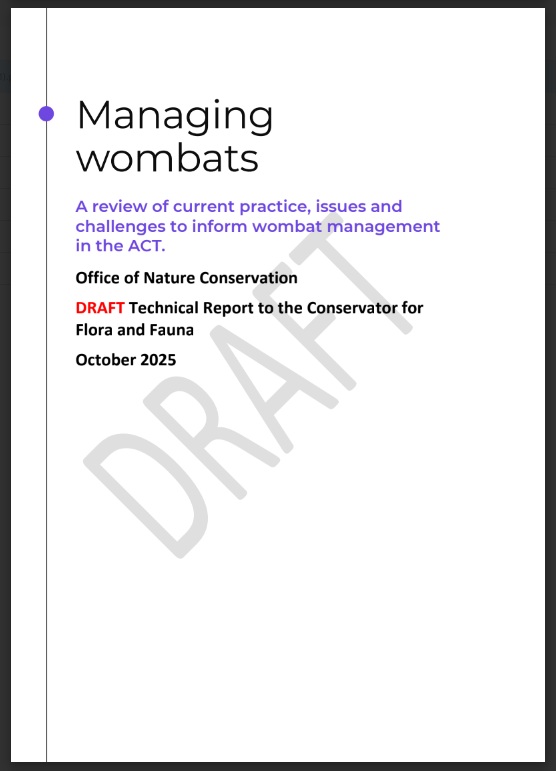
In early December, the ACT Government quietly released a draft Technical Report on Managing Wombats – but only for stakeholder comment, not public consultation.
The report responds to complaints from a few farmers claiming there are too many wombats and they are damaging their land.
Based on these anecdotal reports alone – with no ecological evidence showing ‘management’ is even necessary – it makes 5 recommendations.
Two of those recommendations would allow farmers to be licensed to legally shoot wombats on their land, if approved by the ACT Environment Minister.
Here’s what’s missing: there’s no data on wombat population sizes or their actual impacts. Most landholders haven’t even been consulted. This report is a response to complaints from a handful of farmers, not facts.
Wombats are protected native wildlife. They already face threats from habitat loss, mange, vehicle strikes and now legal shooting if this plan goes ahead.
If approved, this report paves the way for wombats, which are currently protected, to become a “controlled native species”. This could allow legal shooting by farmers with few controls.
1. No data or evidence has been provided of the ecological, stock, or infrastructure damage that the report is responding to
2. Shooting is being promoted as an animal welfare response to wombats suffering with severe mange – yet offers by Wombat Rescue to assess and treat these animals go unanswered.
3. No farmers have used the ACT Governments community wombat reporting portal to report wombat concerns and seek expert assistance. Shooting appears to be the preferred option.
4. There is no data on the wombat population or its distribution, yet the ACT Government is recommending moves towards wombats becoming a ‘controlled native species’.
5. The ACT Government has not committed to any pilot programs to trial innovative and collaborative approaches to non-lethal control of wombats before considering shooting them.